

Quick Answer
Neither grade is universally “best”—the correct choice depends on which component of the dental implant is being manufactured. For the implant fixture (the threaded body that fuses with jawbone), ASTM F67 Grade 4 commercially pure titanium is the clinical reference standard because its surface oxide layer and lower elastic modulus promote optimal osseointegration . For prosthetic attachments (abutments, screws, Ti-Bases) that must withstand millions of masticatory cycles, ASTM F136 Ti-6Al-4V ELI (Grade 23) is superior due to its 60–80% higher tensile strength and fatigue resistance . The governing design philosophy in modern implantology is “Grade 4 where biology is needed; Grade 5 ELI where mechanics is needed” .
Key Takeaways
- Grade 4 (F67) is the osseointegration standard. FDA device records confirm dental implant fixtures are manufactured from commercially pure titanium Grade 4 per ASTM F67 with SLA surface treatment .
- Grade 23 (F136) is the mechanical standard for attachments. Abutments and prosthetic components require the higher fatigue strength of Ti-6Al-4V ELI; mechanical failures in implantology most often occur in screws and connections, not the implant body .
- Strength gap is substantial. Grade 4 offers approximately 550 MPa tensile strength and 483 MPa yield, while Grade 23 ELI delivers 860 MPa tensile and 795 MPa yield .
- Elastic modulus matters for bone health. Grade 4′s modulus (~105 GPa) is closer to cortical bone than Grade 23′s (~110–115 GPa), reducing stress shielding at the implant-bone interface .
- The target URL provided is for Ti-6246 aerospace alloy—not a dental implant material. Medical titanium bar product pages should be referenced for implant applications.
The Two Standards: What Each One Covers
ASTM F67: Commercially Pure Titanium for Implant Fixtures
ASTM F67 is the standard specification for unalloyed titanium for surgical implant applications. It covers four grades (1–4), with Grade 4 being the strongest and most commonly specified for dental implants .
Key properties of Grade 4 (annealed):
| Property | Value |
|---|---|
| Tensile Strength | ~550 MPa |
| Yield Strength | ~483 MPa |
| Elastic Modulus | ~105 GPa |
| Structure | Practically pure alpha (α) phase |
Source: Smiths Advanced Metals data sheet ; DESS Dental clinical analysis
The absence of alloying elements means the surface spontaneously develops a stable TiO₂ oxide layer only nanometers thick. This layer promotes protein adsorption, osteoblast adhesion, and bone mineralization—the biological sequence that defines successful osseointegration .
ASTM F136: Ti-6Al-4V ELI for Load-Bearing Components
ASTM F136 covers wrought Ti-6Al-4V ELI (Extra Low Interstitial), designated Grade 23. The ELI designation limits oxygen to 0.13% max (versus 0.20% for standard Grade 5), improving ductility and fracture toughness .
Key properties of Grade 23 (annealed, bar <44.45mm):
| Property | Value |
|---|---|
| Tensile Strength | 860 MPa min |
| Yield Strength | 795 MPa min |
| Elastic Modulus | ~110–115 GPa |
| Structure | Alpha-beta (α+β) |
Source: Smiths Advanced Metals ASTM F136 data sheet
The alloy’s strength comes from aluminum (alpha stabilizer) and vanadium (beta stabilizer), creating a two-phase microstructure that resists deformation under cyclic loading far better than commercially pure titanium .
Component-by-Component Selection: Matching Material to Function
The Implant Fixture: Grade 4 (F67) Is the Reference
The implant body has one primary job: integrate with bone and remain biologically stable for decades. Its design priority is biocompatibility and osseointegration, not maximum strength.
FDA’s Global Unique Device Identification Database contains records confirming this: the DIO UF Implant System’s fixtures are “made of commercial pure titanium, grade 4 (ASTM F67) which have a S.L.A (Sand-blasted Large grit Acid-etched) treated surface” . The SLA surface treatment further enhances the already favorable biological response of Grade 4 titanium.
The lower elastic modulus of Grade 4 (~105 GPa) compared to Grade 23 (~110–115 GPa) provides a modest but meaningful advantage in reducing stress shielding—the phenomenon where a stiffer implant carries too much load and causes surrounding bone to resorb .
The Prosthetic Attachment: Grade 23 (F136) Is Superior
Abutments, Ti-Bases, Multi-Units, and prosthetic screws face a different mechanical environment. They must withstand:
- Millions of masticatory cycles over the implant’s lifetime
- High stress concentrations at the implant-abutment connection
- Micromovements that can initiate fatigue cracks
- Eccentric and parafunctional forces (bruxism, clenching)
Studies consistently show that mechanical failures in implantology most often occur in the screw, the connection, or the Ti-Base—not in the implant body itself . This is why modern implant engineering concentrates the highest-strength material precisely where the highest stresses occur.
FDA 510(k) records confirm this practice: customized abutments are manufactured from Ti-6Al-4V ELI per ASTM F136, with fatigue testing per ISO 14801 as part of the regulatory submission . Smiths Advanced Metals’ Grade 23 data sheet explicitly lists “dental implant abutments” among its applications .
The Design Philosophy Summarized
| Component | Material | Standard | Primary Requirement |
|---|---|---|---|
| Implant fixture (body) | Grade 4 CP Titanium | ASTM F67 | Osseointegration, biocompatibility |
| Abutment / Ti-Base | Grade 23 Ti-6Al-4V ELI | ASTM F136 | Fatigue resistance, strength |
| Prosthetic screw | Grade 23 Ti-6Al-4V ELI | ASTM F136 | Torque strength, fatigue resistance |
Source: DESS Dental material selection analysis ; FDA device records
What the Target Supplier Offers (and What It Does Not)
The URL Discrepancy
The target URL provided (https://www.xinnuoti.com/ti6246-titanium-bar-applied-for-aeronautical-aircraft-and-aero-engines-product/) is for Ti-6246 (Ti-6Al-2Sn-4Zr-6Mo), an aerospace alloy used in aero-engine compressor blades and discs. This is not a dental implant material. The page content describes high-temperature creep strength and low-cycle fatigue for aircraft applications—properties irrelevant to oral implantology.
Relevant Supplier Product Pages
However, Xinnuo does offer the correct materials for dental applications on separate pages:
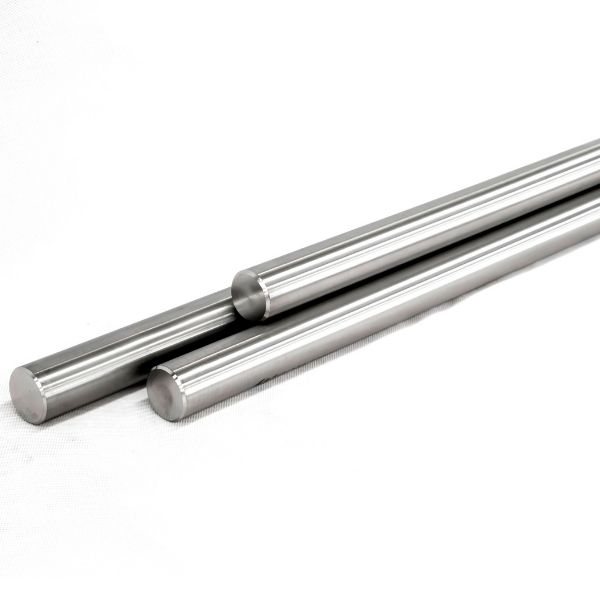
- ASTM F67 Titanium Bar (Rod): Covers Grades 1–4 pure titanium, with the supplier noting that “for dental implants use the unalloyed titanium most, especially for Grade 4″ .
- ASTM F136 Ti-6Al-4V ELI Titanium Bar: Specifies oxygen ≤0.13%, tensile ≥860 MPa, yield ≥795 MPa—the correct material for abutments and screws .
Buyers seeking dental implant materials should reference these pages, not the Ti-6246 aerospace page.
Procurement Verification Checklist
| Verification Item | Grade 4 (F67) | Grade 23 (F136) |
|---|---|---|
| Standard cited | ASTM F67 Grade 4 | ASTM F136 Grade 23 |
| Oxygen content | ≤0.40% (Grade 4 limit) | ≤0.13% |
| Tensile strength | ≥550 MPa | ≥860 MPa |
| Application | Implant fixture | Abutment, screw, Ti-Base |
| Surface finish | Polished, ready for SLA/etching | Polished, precision machining |
| Mill certificate | Required with heat traceability | Required with heat traceability |
A material certificate stating only “titanium” without grade and standard is insufficient. The certificate must explicitly reference ASTM F67 Grade 4 or ASTM F136 Grade 23.
FAQ
Is Grade 4 or Grade 23 better for the implant that goes into the jawbone?
Grade 4 (ASTM F67) is the clinical reference for the implant fixture. Its surface oxide layer promotes osseointegration, and its lower elastic modulus is closer to bone. FDA device records confirm that dental implant fixtures are manufactured from Grade 4 CP titanium . Grade 23 is too strong for this application—the priority is biology, not mechanics .
Why would an abutment use Grade 23 instead of Grade 4?
Abutments face repeated masticatory forces that can cause fatigue failure. Grade 23′s tensile strength (860 MPa vs. 550 MPa for Grade 4) and fatigue resistance are significantly higher. Since mechanical failures in implant systems most often occur at the connection or screw, using the strongest material for these components is standard engineering practice .
Can a dental implant use Grade 23 for the fixture?
Technically possible, but not the clinical standard. FDA 510(k) records show some threaded root form implants manufactured from Ti-6Al-4V ELI , but the predominant practice for osseointegration-focused fixtures remains Grade 4 CP titanium. The choice depends on the specific implant design and its regulatory pathway.
What does “ELI” mean in ASTM F136?
Extra Low Interstitial. It indicates tighter limits on oxygen, nitrogen, carbon, and iron compared to standard Grade 5 Ti-6Al-4V. The lower oxygen content (0.13% max) improves ductility and fracture toughness—critical for components under cyclic loading .
Does the target supplier (Xinnuo) offer ASTM F67 Grade 4 for dental implants?
Yes, on a separate product page. The supplier states that “for dental implants use the unalloyed titanium most, especially for Grade 4″ and offers ASTM F67 Grades 1–4 bar . The Ti-6246 aerospace page referenced in the URL is not a dental material.
What certifications should a dental titanium bar supplier have?
At minimum, ISO 13485 for medical device quality management. The target supplier states this certification. Buyers should also request material certificates traceable to heat number, showing chemistry and mechanical properties against ASTM F67 or ASTM F136, and third-party test reports if available .
Is there a vanadium-free alternative for dental abutments?
Yes. Ti-6Al-7Nb (per ISO 5832-11) replaces vanadium with niobium, addressing the cytotoxicity concern flagged for vanadium (though not clinically confirmed). Its mechanical properties are comparable to Ti-6Al-4V, and it is used in Europe for load-bearing implants . Xinnuo lists Ti-6Al-7Nb among its implant-grade offerings .
Post time: Nov-10-2026