

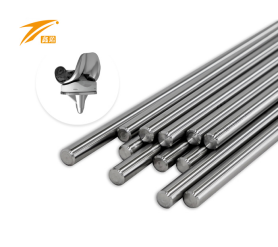
Ti-6Al-4V ELI titanium bar is specifically designed and used for manufacturing medical implants.
It is widely regarded as the "gold standard" among medical titanium alloys. Its core value lies in maintaining the high strength and excellent biocompatibility of titanium alloys while significantly improving toughness and long-term reliability through stricter compositional control.
What Is It? – The Meaning of "ELI"
Ti-6Al-4V ELI Stands for Extra Low Interstitial Ti-6Al-4V alloy, internationally known as Titanium Grade 23 to distinguish it from conventional Grade 5 titanium. The key differences between Ti-6Al-4V ELI (Grade 23) and conventional Ti-6Al-4V (Grade 5) are as follows:
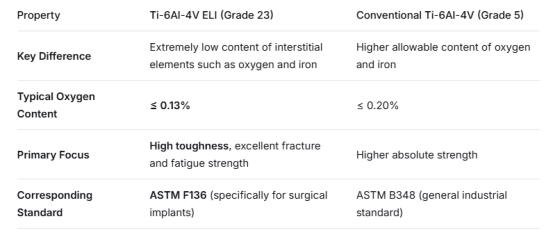
Key Properties and Advantages
This "extra low interstitial" microstructure provides several critical advantages for medical applications:
Higher Fracture Toughness and Fatigue Resistance: The strictly controlled levels of oxygen, iron, and other elements prevent the formation of brittle compounds. This gives the material a significantly greater ability to resist fatigue fracture under the complex cyclic stresses of the human body (e.g., loads during walking)—a critical requirement for long-term implants.
Excellent Biocompatibility and Corrosion Resistance: Inheriting titanium's inherent non-toxicity to human tissue, the alloy forms a stable oxide layer on its surface that virtually does not corrode in bodily fluids, with extremely low metal ion release, ensuring long-term safety.
Reliable Mechanical Properties: With a tensile strength typically exceeding 860MPa and elongation over 10%, it provides sufficient strength for load-bearing applications such as hip and spinal implants while retaining adequate ductility.
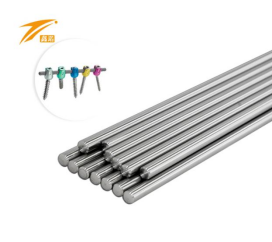
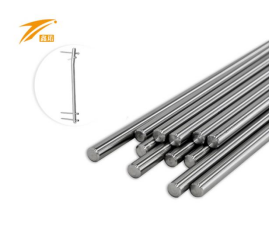
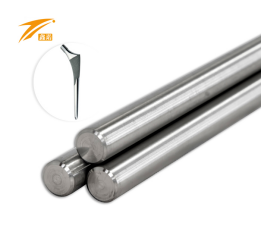
Typical Applications: Where Is It Used in the Body?
As a dedicated implant material compliant with ASTM F136, it is widely used to manufacture various critical load-bearing implants:
Large Load-Bearing Joints: Artificial hip stems, knee replacement components, etc., which endure significant long-term stress and demand high fatigue strength.
Spinal Fixation Systems: Spinal fusion cages, pedicle screw-rod systems, etc., used to stabilize and support the spine.
Trauma and Dental Applications: High-strength bone plates, bone screws, and dental implants.
Post time: Aug-05-2026