

Selecting the right titanium alloy bar stock for orthopedic implants is fundamentally about striking the optimal balance between safety and performance, while strictly adhering to relevant international and national standards. This is not merely a raw material procurement exercise; it is a critical decision that directly impacts patient outcomes and the success of product regulatory approvals. Below is a structured decision-making framework for your reference.
Step 1: Define the Clinical Application Scenario
This is the foundational step in the selection process. Different implant types impose vastly different mechanical requirements on the material:
Load-Bearing Sites – like artificial hip/knee joint stems, spinal fusion cages. These require ultra-high strength and excellent fatigue resistance to withstand long-term cyclic loading in the human body.
Non-Load-Bearing Sites – like bone screws, bone plates. These need a good combination of strength and toughness to provide stable fixation.
Special Sites – like pediatric orthopedics or peri-articular implants. These require special attention to the material’s elastic modulus to minimize “stress shielding” and promote healthy bone remodeling.
1. Grade: Ti-6Al-4V ELI, ASTM F136 Standard
The Key Characteristics & Typical Applications: The gold standard. Offers high strength, excellent toughness, and superior fatigue performance. It is the benchmark material for load-bearing implants such as artificial joints and spinal internal fixation systems. The “ELI” (Extra Low Interstitial) designation ensures tightly controlled levels of oxygen, iron, and other interstitial elements, resulting in superior fracture toughness compared to standard Ti-6Al-4V.
2. Grade: Ti-6Al-4V, ISO 5832-3 Standard
The Key Characteristics & Typical Applications: The Standard version. Similar properties to the ELI grade but with slightly wider impurity tolerances, making it more cost-effective. Suitable for load-bearing or non-load-bearing components where maximum toughness is not the top priority.
3. Grade: Ti-6Al-7Nb, ISO 5832-11 Standard
The Key Characteristics & Typical Applications:Vanadium-free alternative.Replaces vanadium (V)—which has potential cytotoxicity concerns—with niobium (Nb), offering improved biocompatibility. Widely used in Europe for bone screws, plates, and other applications.
Step 2: Select the Material Grade Based on Application
Once the application is defined, you can narrow down the choice among the following mainstream grades. Ti-6Al-4V ELI (ASTM F136) is the most widely used and well-established standard in orthopedics.
Step 3: Conduct Acceptance Testing per International Standards
After grade selection, you must perform incoming inspection based on authoritative standards to ensure batch-to-batch compliance.
Core Standard is the Prerequisite – For Ti-6Al-4V ELI, ASTM F136 is the most critical acceptance standard. It comprehensively specifies chemical composition (especially interstitial elements), mechanical properties (tensile, yield, elongation), and microstructure requirements.
Step 4: Evaluate Supplier Qualifications and Technical Capabilities
Beyond “paper” compliance, the supplier’s actual manufacturing capabilities are equally critical.
Material Test Reports (MTR) – Require a third-party certified test report for each lot, certifying that chemical composition and mechanical properties meet specifications.
Quality Management System – Ensure the supplier is certified to ISO 13485 (Medical devices – Quality management systems), demonstrating robust quality control processes.
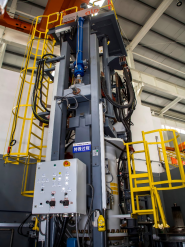
Process Control – Understand the supplier’s melting (like VAR – Vacuum Arc Remelting), heat treatment processes, Consistent, well-controlled processes are essential to achieve a uniform, fine-grained microstructure, which directly impacts fatigue life.
Step 5: Assess Customization and Technical Support Capabilities
A superior supplier is more than just a vendor; they are a collaborative partner.
Dimensional Specifications – Can they provide the precise diameter, length, and straightness you require (like medical-grade machining often requires straightness ≤0.7 mm/m or better)?
Surface Quality – Does the surface finish (turned or ground) meet the requirements for subsequent precision machining?
Technical Exchange – Whether the supplier willing to engage in in-depth technical discussions regarding machinability, heat treatment parameters, and other processing considerations? This proactive collaboration can help you avoid many downstream production issues.

Post time: Sep-01-2026