

 Quick Answer
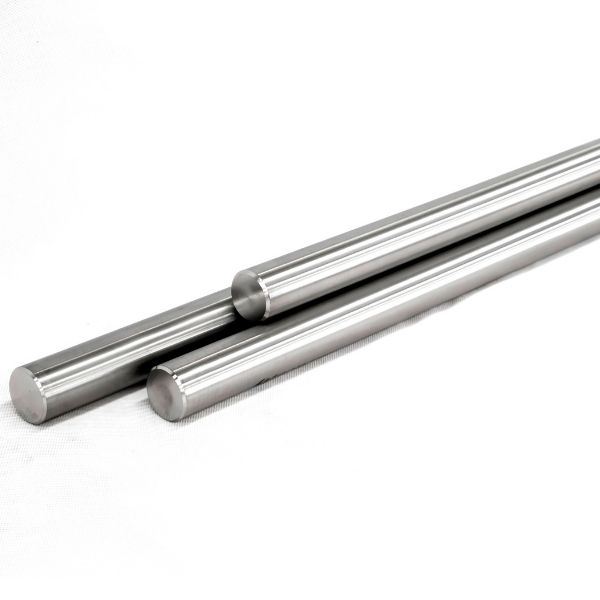
Choosing the right titanium bar for orthopedic implants requires matching the material grade to the implant’s mechanical function, then verifying that the supplier can document compliance with the correct ASTM or ISO standard. Load-bearing implants like bone screws and spinal rods require Ti-6Al-4V ELI (ASTM F136 / ISO 5832-3) for its high yield strength (~795 MPa) and fracture toughness. Bone-contact surfaces where osseointegration is primary—such as dental implant bodies—typically use Grade 4 commercially pure titanium (ASTM F67). The target supplier, Xinnuo, offers bar stock for cortical, cancellous, and locking bone screws, with stated capabilities in microstructure customization, triple-melting, and heat-number traceability .
Key Takeaways
- Standard selection precedes supplier selection. Confirm whether your implant design requires ASTM F136 (Ti-6Al-4V ELI alloy) or ASTM F67 (unalloyed titanium) before requesting quotes—they are not interchangeable .
- Grade 23 is the common designation for F136 alloy. For bone screws and load-bearing components, Grade 23 titanium bar is the standard specification because its extra-low interstitial composition is designed for surgical implant applications .
- Mechanical properties must match the application. F136 alloy provides significantly higher strength for cyclic loading; F67 Grade 4 offers better biocompatibility and a lower elastic modulus for bone integration.
- Traceability is non-negotiable. A supplier must link melt lot number → chemical composition → mechanical properties → microstructure → product specification → material certification .
- The target supplier states ISO 13485 certification and heat-number marking from ingot to finished bar, practices aligned with medical device quality expectations .
Step 1: Determine the Material Standard and Grade
ASTM F136 vs. ASTM F67: The Core Distinction
The first decision is whether the implant requires an alloy or commercially pure titanium. This is determined by the implant’s biomechanical function, not by supplier preference.
| Standard | Material | Typical Grade | Key Application |
|---|---|---|---|
| ASTM F136 | Ti-6Al-4V ELI alloy | Grade 23 | Bone screws, spinal rods, load-bearing fixation |
| ASTM F67 | Unalloyed titanium | Grade 4 (most common) | Dental implant bodies, bone-contact surfaces |
The target supplier’s bone screw product page lists suitability for cortical bone screws, cancellous bone screws, locking screws, and medical titanium rods . These are load-bearing applications where the F136 alloy’s strength is the appropriate specification.
Current Standard Editions
Verify that the supplier references the current edition of the applicable standard:
- ASTM F136-26 is the current specification for wrought Ti-6Al-4V ELI, published in 2026 .
- ASTM F67-24 is the current specification for unalloyed titanium, published in December 2024 .
- ISO 5832-3:2021 is the international equivalent for the wrought Ti-6Al-4V alloy .
- GB 4234.3-2024 (China) adopts ISO 5832-3:2021 and takes effect November 1, 2026 .
A supplier quoting an older edition (e.g., F136-13) is not automatically disqualified, but the buyer should confirm that the material still meets the current requirements or that the older edition is acceptable for the target market.
Step 2: Verify Mechanical Properties and Microstructure
What the Certificate Must Show
For F136 (Ti-6Al-4V ELI), the material certificate should document:
- Tensile strength: Minimum 860 MPa
- Yield strength: Minimum 795 MPa
- Elongation: Minimum 10%
- Reduction of area: Minimum 25%
- Oxygen content: Maximum 0.13% (the “ELI” requirement)
The target supplier states that its ELI bars can achieve tensile strength above 1100 MPa with an A3 microstructure rating—claims that should be supported by actual mill test data, not just marketing statements.
Why Microstructure Matters
Microstructure affects both mechanical performance and machinability. An A3 rating (per ASTM E112 or equivalent) indicates a fine, uniform grain structure, which contributes to consistent fatigue behavior. The target supplier states that microstructure is controllable and customizable , a capability relevant for implant manufacturers who need specific grain size for machining or fatigue requirements.
Step 3: Confirm Melting Practice and Traceability
Triple Melting for Homogeneity
Medical-grade titanium requires multiple melting to ensure chemical homogeneity and remove volatile impurities. The target supplier states it melts ingots in imported German ALD vacuum ovens and marks the heat number from the ingot through every production step, printing it on the final polished bar . This traceability is essential: a mill certificate is only meaningful if the heat number on the certificate matches the specific bar being supplied.
The Traceability Chain
A complete traceability record for medical titanium bar should connect :
- Melt lot number
- Chemical composition analysis
- Mechanical test results
- Microstructure classification
- Product specification (diameter, length, tolerance)
- Material certification
Without this chain, the buyer cannot verify that the bar they received is the material that was tested.
Step 4: Evaluate Inspection and Testing Capability
Flaw Detection
The target supplier states that every bar is tested with ultrasonic and eddy current testing to detect cracks and surface defects, and that infrared diameter gauges verify dimensional consistency . These are appropriate inspection methods for medical-grade bar stock:
- Eddy current testing detects surface and near-surface flaws
- Ultrasonic testing detects internal discontinuities
- Infrared gauging verifies diameter consistency along the bar length
Third-Party Verification
The target supplier states that tensile and yield strength are tested by its own tension tester and a third-party lab to double check the quality . Third-party verification adds credibility—especially if the third-party lab is accredited (e.g., CNAS, ISO 17025).
Step 5: Confirm Supplier Certifications and Quality System
The target supplier states ISO 9001 and ISO 13485 certification . For medical device material suppliers, ISO 13485 is the relevant quality management standard—it demonstrates that the supplier’s processes and records meet medical device industry requirements.
Buyers should verify:
- Certificate scope: Does it cover the specific product form (bar) and material grade being purchased?
- Certificate validity: Is the certificate current?
- Audited site: Does the certificate name the actual production facility?
Selection Checklist
| Verification Item | What to Request | Red Flag If Missing |
|---|---|---|
| Standard and grade | Written confirmation of ASTM F136 Grade 23 or ASTM F67 Grade 4 | Supplier uses vague “medical titanium” language |
| Current edition | Reference to F136-26 or F67-24 | Only cites outdated editions without explanation |
| Chemical composition | Certificate showing ELI limits (O ≤0.13%, Fe ≤0.25%) | Only states “Ti-6Al-4V” without interstitial limits |
| Mechanical properties | Tensile, yield, elongation, reduction of area against standard minimums | No test data, or data from a different heat |
| Microstructure | A3 or equivalent rating with photo documentation | No microstructure data for F136 material |
| Melting practice | Triple-melt confirmation (VAR or equivalent) | Single-melt or unspecified |
| Flaw detection | Eddy current + ultrasonic records for the lot | “Inspected” without specific test method |
| Traceability | Heat number linking certificate to bar | Certificate not traceable to supplied lot |
| Quality system | ISO 13485 certificate with relevant scope | ISO 9001 only, or expired certificate |
FAQ
What is the difference between Grade 23 and Grade 5 titanium for bone screws?
Grade 23 is the UNS designation for Ti-6Al-4V ELI (Extra Low Interstitial), specified by ASTM F136. Grade 5 is standard Ti-6Al-4V with broader interstitial limits. For bone screws, Grade 23 is the typical specification because the lower oxygen content improves ductility and fracture toughness—properties important for implants under cyclic loading .
Can ASTM F67 Grade 4 titanium be used for bone screws?
F67 Grade 4 is commercially pure titanium with lower strength than F136 alloy. It is more commonly specified for dental implant bodies where osseointegration is primary. For load-bearing bone screws, F136 alloy is the standard choice because of its higher yield strength and fatigue resistance.
What does “ELI” mean in ASTM F136?
ELI stands for Extra Low Interstitial. It indicates tighter limits on oxygen, nitrogen, carbon, and iron compared to standard Grade 5 Ti-6Al-4V. The lower oxygen content (0.13% maximum vs. 0.20%) improves ductility and fracture toughness .
Is the target supplier’s material certified to ASTM F136?
The target supplier’s product page does not explicitly state ASTM F136 certification in the extracted content. The supplier states ISO 9001 and ISO 13485 certification and describes quality control processes consistent with medical-grade material. Buyers should request the material certificate for the specific lot to confirm the standard and grade before purchasing.
What is the current edition of ASTM F136?
ASTM F136-26, published in 2026, is the current edition . The standard is under the jurisdiction of ASTM Committee F04 on Medical and Surgical Materials and Devices, Subcommittee F04.12 on Metallurgical Materials.
How do I verify that a supplier’s titanium bar is actually medical-grade?
Request: (1) a material test certificate traceable to the heat number, showing chemical composition and mechanical properties against the specified standard; (2) flaw detection records for the lot; (3) microstructure documentation if required by your design; (4) confirmation that the supplier’s quality system is certified to ISO 13485.
What is the significance of GB 4234.3-2024 for titanium bar buyers?
GB 4234.3-2024 is China’s adoption of ISO 5832-3:2021 for wrought Ti-6Al-4V alloy. It takes effect November 1, 2026 . Suppliers targeting the Chinese medical device market should be prepared to demonstrate conformance to this standard after that date.
Post time: Nov-10-2026