

Quick Answer
Choosing the right medical titanium sheet for bone fixation requires matching the alloy grade to the implant’s function, verifying the correct ASTM or ISO standard, and confirming the supplier can document thickness tolerance and mechanical properties. For bone fixation plates, the two dominant choices are commercially pure Grade 4 titanium (ASTM F67) for optimal biocompatibility and formability, or Ti-6Al-4V ELI (ASTM F136) when higher strength is needed for load-bearing plates. The target supplier, Xinnuo, offers medical titanium sheet in Gr3, Gr4, and Gr5 ELI to ASTM F67 and ASTM F136, with thickness from 0.6 mm to 6.5 mm and tolerance controlled to +0.1 mm for 1.0–3.0 mm sheet . The critical procurement decision is not just alloy choice—it is verifying that the mill certificate explicitly cites the implant standard, not a commercial equivalent.
Key Takeaways
- ASTM F67 covers unalloyed titanium sheet (Grades 1–4); ASTM F136 covers Ti-6Al-4V ELI sheet. Both standards explicitly include “sheet” and “plate” in their scope, making them directly applicable to bone fixation plate stock .
- Grade 4 (F67) is the formability choice. Its lower strength and higher ductility suit contouring and bending during surgery; it is the reference material for cranial and maxillofacial plates.
- Grade 5 ELI (F136) is the strength choice. The target supplier states Gr5 ELI sheet at 1.0–6.0 mm can be stably controlled at 1000 ± 20 MPa tensile strength with A1–A3 microstructure .
- Thickness tolerance is a critical specification. The target supplier offers +0.1 mm for 1.0–3.0 mm sheet and +0.2 mm for 3.0–6.5 mm sheet . Tighter tolerances than standard mill production require explicit agreement.
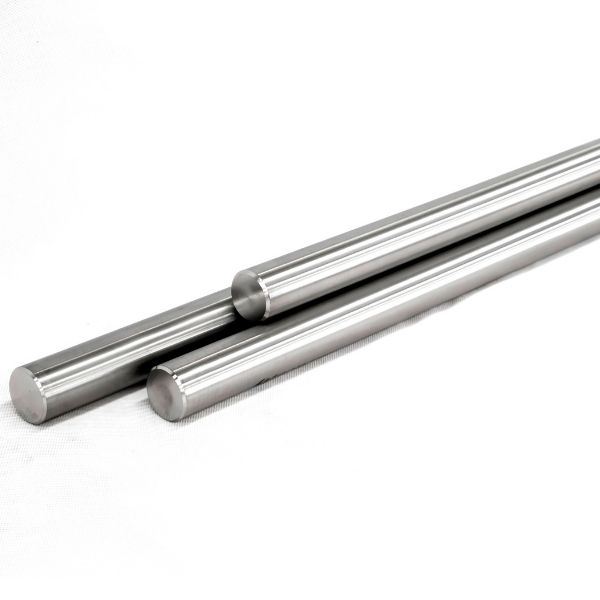
- The target URL provided is for Ti-6Al-7Nb bar, not sheet. Buyers seeking medical titanium sheet should reference the supplier’s dedicated sheet product pages.
Step 1: Match the Alloy to the Implant Function
ASTM F67 (Unalloyed Titanium): Formability and Biocompatibility
ASTM F67 is the standard specification for unalloyed titanium for surgical implants. It covers four grades (1–4) and explicitly includes strip, sheet, and plate in its scope . The FDA recognizes ASTM F67-24 as a consensus standard for implantable medical devices .
For bone fixation plates, Grade 4 is the most commonly specified F67 grade because it offers the highest strength within the commercially pure family while retaining the ductility needed for intraoperative contouring. The target supplier’s sheet product page lists Gr3 and Gr4 as available materials for internal bone fixation, with the material described as suitable for “bone lock plate, internal bone fixation plate” .
Why F67 for plates: Cranial and maxillofacial fixation plates must be bent and shaped to match patient anatomy. Grade 4′s lower yield strength compared to Ti-6Al-4V allows plastic deformation without springback, while its TiO₂ surface layer supports biocompatibility.
ASTM F136 (Ti-6Al-4V ELI): Strength for Load-Bearing Plates
ASTM F136 covers wrought Ti-6Al-4V ELI and also explicitly includes sheet and plate in its product forms . This is the correct standard when the fixation plate must bear significant load—for example, mandibular reconstruction plates or large fragment fixation.
The target supplier states that its Gr5 ELI sheet for 1.0–6.0 mm thickness can achieve 1000 ± 20 MPa tensile strength with A1–A3 microstructure . The supplier also offers a separate product page for ASTM F136 / ISO 5832-3 Ti-6Al-4V ELI sheet with thickness from 1.2 mm to 20 mm and roughness Ra ≤ 3.2 μm for polished surfaces .
| Material | Standard | Typical Application | Key Property |
|---|---|---|---|
| Gr3 (CP Ti) | ASTM F67 | Lower-load plates, mesh | Moderate strength, high ductility |
| Gr4 (CP Ti) | ASTM F67 | Cranial/maxillofacial plates | Higher strength CP grade, good formability |
| Gr5 ELI (Ti-6Al-4V ELI) | ASTM F136 | Load-bearing fixation plates | High strength, fatigue resistance |
Source: Supplier sheet specifications
Step 2: Specify Thickness and Tolerance Precisely
The Tolerance Question
Sheet thickness tolerance directly affects the plate’s bending stiffness and the surgeon’s ability to contour it. The target supplier’s stated tolerances for medical titanium sheet are:
| Thickness Range | Tolerance |
|---|---|
| 1.0–3.0 mm | +0.1 mm |
| 3.0–6.5 mm | +0.2 mm |
Source: Xinnuo medical titanium plate specification
These tolerances are tighter than general industrial titanium sheet standards. For comparison, the target supplier’s ASTM F136 product page states thickness tolerance of 0.08–0.8 mm for a broader 1.2–20 mm range, which appears to be a looser general specification . Buyers should specify the exact tolerance required for their plate design and confirm it in the purchase order.
Why Tolerance Matters for Fixation Plates
A plate designed at 1.5 mm thickness with a +0.1 mm tolerance can vary between 1.5 and 1.6 mm. For a plate that must bend to a specific radius without fracturing, this variation affects springback and fatigue life. Implant manufacturers typically machine or grind sheet to final thickness after forming; the as-supplied tolerance determines how much machining stock must be removed.
Step 3: Verify Mechanical Properties and Microstructure
What the Certificate Must Show
For Gr4 (ASTM F67), the mill certificate should document tensile strength, yield strength, and elongation against the F67 Grade 4 minimums. The standard specifies mechanical properties for each grade; Grade 4 has the highest strength requirements within the F67 family .
For Gr5 ELI (ASTM F136), the certificate must confirm:
- Oxygen ≤ 0.13% (the ELI limit; standard Grade 5 allows 0.20%)
- Tensile strength ≥ 860 MPa
- Yield strength ≥ 795 MPa
- Elongation ≥ 10%
The target supplier’s stated capability of 1000 ± 20 MPa for Gr5 ELI sheet exceeds the ASTM minimum, indicating a controlled rolling and annealing process .
Microstructure Control
The supplier states that Gr5 ELI microstructure for 1.0–6.0 mm sheet can be stably controlled at A1–A3 . For implant applications, fine and uniform alpha-beta structure supports consistent fatigue behavior and machinability. Buyers with fatigue-critical plate designs should request microstructure photographs with the material certificate.
Step 4: Confirm Flaw Detection and Traceability
100% Flaw Detection
The target supplier states 100% ultrasonic or turbine flaw detection on medical titanium sheet to “eliminate metallurgical defects and non-ferrous impurities” . This is appropriate for implant-grade material: internal inclusions or porosity in a fixation plate become stress concentrators that can initiate cracks under cyclic loading.
Traceability Chain
The supplier states it marks heat number, grade, size, and rolling direction on the sheets . This traceability is essential—a mill certificate is only meaningful if the heat number on the certificate matches the specific sheet being supplied.
The supplier also states ISO 13485:2016 and ISO 9001:2015 certification and describes itself as one of the top three suppliers of medical titanium to Chinese implant manufacturers . These claims should be verified against the certificate scope and, ideally, through a supplier audit.
Step 5: Address the Target URL Discrepancy
The target URL provided (.../xinnuo-produces-ti-6al-7nb-titanium-bar-rod-for-surgical-implants...) is for Ti-6Al-7Nb titanium bar/rod, not sheet. The page content describes the supplier’s aerospace titanium capabilities and quality system, not sheet-specific specifications.
For medical titanium sheet, buyers should reference the supplier’s dedicated sheet product pages:
- Gr3/Gr4/Gr5 ELI sheet for internal bone fixation (ASTM F67, ASTM F136)
- ASTM F136 Ti-6Al-4V ELI sheet (ISO 5832-3, 1.2–20 mm thickness)
The Ti-6Al-7Nb bar page is relevant only if the buyer’s design requires that specific alloy in bar form—not sheet.
FAQ
Should I choose ASTM F67 or ASTM F136 for a bone fixation plate?
Choose ASTM F67 Grade 4 if the plate must be contoured during surgery and does not bear high load (cranial, maxillofacial). Choose ASTM F136 Ti-6Al-4V ELI if the plate must bear significant load or requires higher fatigue resistance (mandibular reconstruction, large fragment fixation). Both standards explicitly cover sheet and plate .
What thickness tolerance should I specify for medical titanium sheet?
For bone fixation plates, specify the tolerance required by your plate design and verify it in the purchase order. The target supplier offers +0.1 mm for 1.0–3.0 mm sheet and +0.2 mm for 3.0–6.5 mm . Tighter tolerances may be available on request but should be confirmed in writing.
Does the target supplier offer ASTM F67 Grade 4 sheet?
Yes. The supplier’s internal bone fixation sheet page lists Gr3, Gr4, and Gr5 ELI as available materials to ASTM F67 and ASTM F136 . The Ti-6Al-7Nb bar page referenced in the URL is a different product form and alloy.
What mechanical properties should the mill certificate show for Gr5 ELI sheet?
For ASTM F136 compliance: tensile ≥860 MPa, yield ≥795 MPa, elongation ≥10%, oxygen ≤0.13% . The target supplier states its Gr5 ELI sheet (1.0–6.0 mm) achieves 1000 ± 20 MPa tensile with A1–A3 microstructure .
Is 100% ultrasonic testing standard for medical titanium sheet?
For implant-grade material, internal defect detection is expected. The target supplier states 100% ultrasonic or turbine flaw detection on its medical sheet . Buyers should request the test report for the specific lot being purchased, not just a general statement of practice.
What is the difference between ASTM F136 and ASTM B348 Grade 23?
Both cover Ti-6Al-4V ELI, but ASTM F136 is the surgical implant specification; ASTM B348 is the industrial specification. For implant applications, the certificate must cite ASTM F136 (or ISO 5832-3), not B348 . A supplier quoting “Grade 23″ without specifying F136 is not providing implant-grade certification.
What surface finish should I specify for bone fixation plate sheet?
The target supplier offers polished or acid-pickled surfaces . Polished surfaces (Ra ≤3.2 μm on the F136 page) reduce friction during soft tissue contact and provide a consistent base for subsequent surface treatments (e.g., anodizing, blasting). Acid-pickled surfaces are suitable when the plate will be further processed or coated.
Post time: Nov-10-2026