

Quick Answer
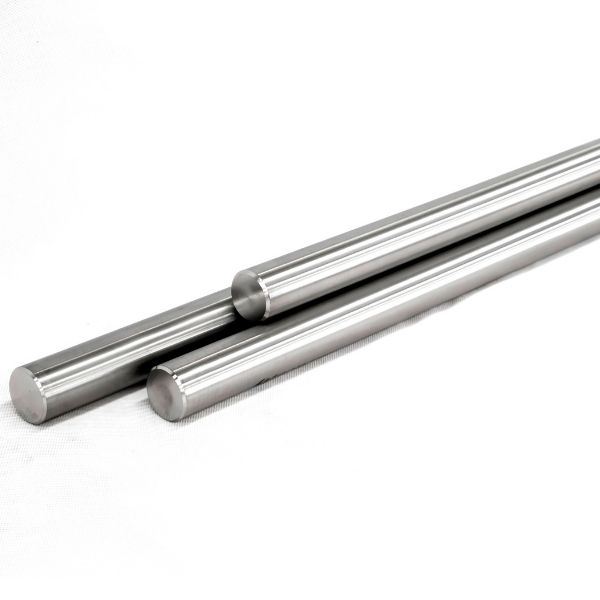
Titanium bar is the raw material from which spinal, hip, knee, and bone screw implants are machined, forged, or additively manufactured. The specific alloy and product form depend on the implant’s mechanical function: Ti-6Al-4V ELI (Grade 23) is the standard for bone screws and load-bearing spinal components because of its high strength (~860 MPa tensile) and fracture toughness . Commercially pure titanium (Grade 4) is preferred for surfaces requiring osseointegration, such as porous spinal cages and dental implant bodies . In hip and knee arthroplasty, titanium alloy bars become femoral stems and tibial trays, often paired with wear-resistant surfaces. The target supplier, Xinnuo, offers medical-grade titanium bar for cortical, cancellous, and locking bone screws as well as spinal implants .
Key Takeaways
- Bone screws use Grade 23 Ti-6Al-4V ELI almost exclusively. FDA device records confirm cortical screws are manufactured from Ti6Al4V ELI per ASTM F136 .
- Spinal implants consume titanium bar in two forms. Solid bar becomes pedicle screws and rods; porous or 3D-printed titanium structures become interbody cages for fusion .
- Hip implants use titanium for the stem, not the bearing surface. Ti-6Al-4V bar is forged into femoral stems; the articulating head is typically CoCr or ceramic .
- Knee implants use titanium for the tibial tray and femoral component substrate, with nitrided Ti-6Al-4V showing wear performance comparable to CoCr in recent studies .
- The target URL provided is for Ti-6246 aerospace alloy—not a medical implant material. Medical titanium bar product pages should be referenced for implant applications.
Spinal Implants: Pedicle Screws, Rods, and Interbody Cages
Solid Titanium Bar for Fixation Hardware
Spinal fixation systems—pedicle screws and rods—are the most direct application of titanium bar in spine surgery. The target supplier’s titanium bar for spine screws page specifies Ti-6Al-4V ELI with oxygen content limited to 0.13% max, meeting ASTM F136 requirements . This material is machined into screws that must withstand insertion torque and cyclic loading during fusion healing.
The supplier states its ELI bars can achieve tensile strength above 1100 MPa with an A3 microstructure rating, and that every bar is tested with eddy current and ultrasonic flaw detection . For spinal screws, internal defect detection is critical—a flaw in the bar becomes a stress concentration point in the finished screw.
Porous and 3D-Printed Titanium for Interbody Cages
Spinal interbody cages have evolved from solid metal blocks to porous titanium structures designed to mimic bone architecture and promote osseointegration . A 2025 review in Current Reviews in Musculoskeletal Medicine notes that 3D printing allows highly customizable spinal implants with patient-specific shapes and controlled porosity . A 2026 comparative review in Journal of Biomaterials Science concludes that porous or patient-specific titanium cages may be favored when early osseointegration and endplate-conforming architecture are priorities .
This application consumes titanium powder rather than bar stock, but the material specification remains medical-grade. Suppliers serving both markets often offer bar for machining and powder for additive manufacturing.
Hip Implants: Femoral Stems and Acetabular Components
The Femoral Stem
The femoral stem is the primary titanium component in total hip arthroplasty. A 1987 ScienceDirect paper on titanium alloys for hip joint replacements states that Ti-6Al-4V is mainly used for anchorage stems of femoral components, paired with wear-resistant CoCrMo metal or Al2O3 ceramic ball heads . The stem is typically forged from titanium bar, then machined and surface-treated.
The rationale for titanium in the stem is corrosion resistance and biocompatibility combined with adequate fatigue strength. The stem must survive millions of loading cycles without fracture, while its surface interfaces with bone (in cementless designs) or bone cement.
Acetabular Shells
Pure titanium (commercially pure, Grade 4) is preferably used for hip cup shells with polyethylene inserts, according to the same ScienceDirect source . The shell’s function is biological fixation to the acetabulum, not load-bearing articulation. CP titanium’s superior osseointegration characteristics make it the material of choice for this component.
Newer Alloys
The 1987 paper also notes that Ti-6Al-7Nb (vanadium-free) was already in clinical use for hip implants by that time . This alloy was developed as a biocompatibility improvement over Ti-6Al-4V, replacing vanadium with niobium. Modern hip systems may specify either Ti-6Al-4V ELI or Ti-6Al-7Nb depending on the manufacturer’s design philosophy and regulatory strategy.
Knee Implants: Tibial Trays and Femoral Components
The Tibial Tray
Knee arthroplasty components include a tibial tray that supports the polyethylene bearing. A patent document describes the solid metal portion of the tibial tray as being made from standard titanium alloy, preferably Ti-6Al-4V, with a porous titanium foam layer sintered onto it for bone ingrowth . This hybrid construction—solid bar for structural integrity, porous layer for biological fixation—is a common design pattern.
Nitrided Ti-6Al-4V Femoral Components
The femoral component in total knee arthroplasty has traditionally been CoCrMo because of its wear resistance. However, concerns about corrosion, metal ion release, and hypersensitivity have driven interest in alternatives. A 2025 study in The Journal of Knee Surgery compared CoCrMo and nitrided Ti-6Al-4V (nTi-6Al-4V) femoral components .
The results: the mean steady-state wear rate of the nTi-6Al-4V bearing couple was 17.0 mg/Mc, noninferior to CoCrMo at 22.8 mg/Mc. No fracture or cracking occurred in fatigue testing of the nTi-6Al-4V components . This suggests that surface-hardened titanium alloy is a viable alternative to cobalt-chrome in knee arthroplasty, using Ti-6Al-4V bar as the substrate.
Bone Screws: The Most Direct Application
Material Specification
Bone screws are the most straightforward use of titanium bar: the bar is machined into a threaded screw, often with a self-tapping feature. FDA’s Global Unique Device Identification Database (GUDID) contains records confirming that cortical screws are manufactured from Ti6Al4V ELI (ASTM F136) .
The target supplier’s titanium bar for bone screw page aligns with this application, listing suitability for cortical bone screws, cancellous bone screws, and locking screws . The supplier offers customization for “better torque and high-torsion angle”—properties that depend on the alloy’s strength and the bar’s thermomechanical processing history.
Why ELI Grade Matters for Screws
A bone screw experiences high torque during insertion and cyclic loading during service. The ELI grade’s lower oxygen content (0.13% vs. 0.20% for standard Grade 5) improves ductility and fracture toughness, reducing the risk of screw head breakage during insertion or fatigue failure under load. The supplier’s stated A3 microstructure and tensile strength >1100 MPa indicate a material optimized for these demands.
Quality Verification
The target supplier states it uses German ALD vacuum melting (3× melt), marks heat numbers from ingot to finished bar, and performs eddy current and ultrasonic testing on every bar . The supplier also states ISO 13485 certification . These are appropriate practices for medical-grade bar stock, though buyers should request material certificates traceable to the specific lot.
FAQ
What titanium alloy is used for bone screws?
The standard is Ti-6Al-4V ELI (Grade 23), specified under ASTM F136. FDA device records confirm cortical screws are made from this material . The target supplier’s bone screw bar is intended for cortical, cancellous, and locking screws .
Is titanium bar used for spinal fusion cages?
Solid titanium bar is used for pedicle screws and rods. Interbody cages increasingly use porous or 3D-printed titanium rather than machined bar, to promote bone ingrowth . Suppliers may offer both bar and powder depending on the implant type.
What part of a hip implant is made from titanium?
The femoral stem is the primary titanium component, typically Ti-6Al-4V or Ti-6Al-7Nb . The acetabular shell may use commercially pure titanium for osseointegration. The articulating head is usually CoCr or ceramic, not titanium.
Does the target URL (Ti-6246) apply to medical implants?
No. The provided URL is for Ti-6246 (Ti-6Al-2Sn-4Zr-6Mo), an aerospace alloy used in aero-engine compressor blades and discs. It is not a surgical implant alloy. For medical applications, reference the supplier’s bone screw or spine screw titanium bar pages .
What is the difference between the supplier’s bone screw and spine screw bar pages?
The bone screw page describes bar suitable for cortical, cancellous, and locking screws . The spine screw page specifies Ti-6Al-4V ELI chemistry (O ≤0.13%, Fe ≤0.25%) and mechanical properties (tensile ≥860 MPa, yield ≥795 MPa) . Both target medical implant applications; the spine page provides more detailed material specifications.
Can titanium bar be used for knee implants?
Yes. The tibial tray solid metal portion is typically Ti-6Al-4V, often with a porous titanium layer for bone ingrowth . The femoral component may use nitrided Ti-6Al-4V, which showed wear performance comparable to CoCrMo in a 2025 study .
What certifications should a medical titanium bar supplier have?
At minimum, ISO 13485 for medical device quality management. The target supplier states this certification . Buyers should also request material certificates traceable to heat number, showing chemistry and mechanical properties against ASTM F136 or the applicable standard.
Post time: Nov-10-2026