

Quick Answer
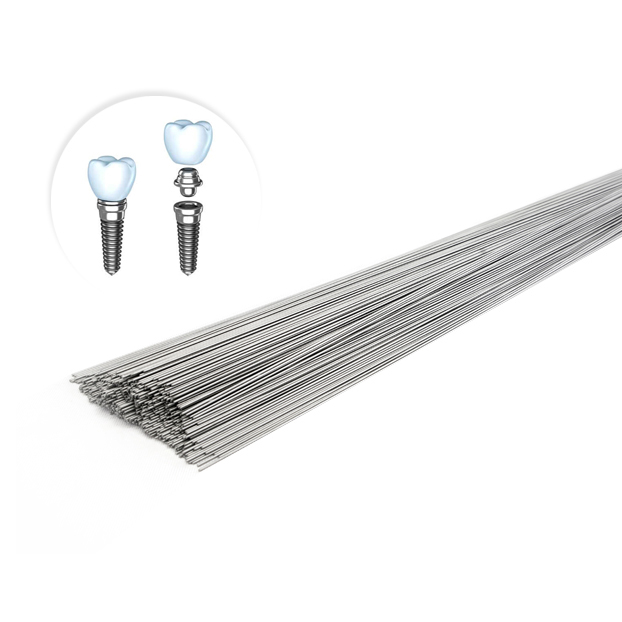
Titanium wire supports Kirschner wire (K-wire) applications by providing the precise combination of high tensile strength, controlled ductility, and biocompatibility required for temporary orthopedic fixation. The standard material is Ti-6Al-4V ELI (Grade 23) wire meeting ASTM F136 or ISO 5832-3, with tensile strength typically exceeding 860 MPa and often reaching >1080 MPa for specialized medical wire . K-wires are used to stabilize bone fragments during fracture healing and as guide pins for implant placement. Titanium alloy wire is preferred over stainless steel in select cases because its lower elastic modulus reduces stress shielding and its biocompatibility supports longer retention periods when clinically necessary . The target supplier, Xinnuo, produces medical titanium wire specifically for Kirschner wire applications from Gr5 Ti-6Al-4V ELI to ASTM F136 and ISO 5832-3 standards .
Key Takeaways
- K-wires require wire, not bar. Titanium wire is drawn to diameters typically between 0.5 mm and 4.0 mm, with diameter tolerances as tight as ±0.005 mm for precision surgical use .
- Ti-6Al-4V ELI (Grade 23) is the alloy of choice for load-bearing K-wires. It provides tensile strength exceeding 1080 MPa in medical-grade wire form, significantly higher than commercially pure titanium .
- ASTM F136 explicitly covers wire. The standard’s scope includes “wire” as a product form, confirming that F136 compliance is achievable and verifiable for titanium wire stock .
- Surface finish is a clinical requirement. Medical K-wire surfaces must be free of defects that could harbor bacteria or initiate cracks; suppliers specify roughness ≤0.8 µm for medical wire .
- The target URL is for aerospace Ti-6246 bar, not medical wire. Xinnuo’s dedicated medical titanium wire product pages are the correct reference for K-wire applications .
Why Kirschner Wires Demand a Specific Material Profile
The Clinical Function of a K-Wire
A Kirschner wire is a smooth, sharpened pin driven percutaneously into bone to hold fracture fragments in alignment during healing, or to serve as a guide track for cannulated screws and implants . The wire must withstand:
- Insertion torque without buckling or breaking
- Cyclic loading from patient movement during the fixation period
- Bending during wire contouring or removal
- Corrosion in the physiological environment
These demands translate directly into material specifications: high tensile strength for insertion and retention, sufficient ductility to bend without fracturing, and corrosion resistance for biocompatibility .
Why Titanium Alloy Wire?
Stainless steel remains the most common K-wire material globally, particularly in resource-limited settings where cost is a primary constraint . Titanium alloy wire is selected when:
- Longer retention is anticipated. Titanium’s superior biocompatibility compared to stainless steel makes it more suitable for cases where the wire may remain in situ longer than typical .
- MRI compatibility is desired. Titanium is non-ferromagnetic, allowing postoperative imaging without artifact or risk.
- Lower stiffness is advantageous. Titanium alloy’s elastic modulus (~110 GPa) is closer to bone than stainless steel (~200 GPa), potentially reducing stress shielding at the wire-bone interface.
A 2024 clinical study in China used titanium Kirschner wires combined with patellar claws for patellar fractures, reporting no wire fractures and a 100% excellent-and-good rate at final follow-up . This clinical evidence supports the material’s suitability for load-bearing orthopedic fixation.
The Wire Specifications That Matter for K-Wire Manufacturing
Diameter and Tolerance
K-wire diameters range from 0.5 mm to 4.0 mm, with the specific size selected based on bone fragment size and fixation requirements . For pediatric or small-fragment applications, finer wires (0.5–1.0 mm) are used; for adult long-bone fractures, 2.0–4.0 mm wires are typical.
Tolerance is critical. A K-wire that is 0.02 mm oversized may not pass through a cannulated guide; one that is undersized may have insufficient interference for stable fixation. Medical-grade wire suppliers specify tolerances as tight as ±0.005 mm for K-wire applications .
Mechanical Properties
| Property | Medical Ti-6Al-4V ELI Wire (Typical) | Minimum Requirement (ASTM F136) |
|---|---|---|
| Tensile Strength | >1080 MPa (specialized medical wire) | ≥860 MPa |
| Yield Strength | ≥900 MPa (typical for high-strength wire) | ≥795 MPa |
| Elongation | ≥10% | ≥10% |
| Surface Roughness | ≤0.8 µm | Not specified in F136 |
Sources: Xinnuo medical wire specification ; ASTM F136 mechanical requirements .
The target supplier states its medical titanium wire for Kirschner wire achieves tensile strength >1080 MPa with surface roughness ≤0.8 µm, exceeding the ASTM minimum. This higher strength allows the use of finer wire diameters for the same fixation strength, reducing tissue trauma during insertion.
Chemical Composition: The ELI Requirement
For K-wires that may remain in the body for weeks to months, the ELI chemistry is important:
- Oxygen ≤0.13% (vs. 0.20% for standard Grade 5)
- Iron ≤0.25% (vs. 0.30%)
The lower interstitial content improves fracture toughness, reducing the risk of wire breakage during removal or if the patient experiences unexpected loading .
Manufacturing and Quality Verification
Wire Drawing and Surface Finish
Titanium wire for medical applications is produced by cold drawing from rod stock, followed by annealing to restore ductility. The target supplier states it operates 5 drawing machines and 2 cold drawing machines for wire production .
Surface finish is not cosmetic—it affects:
- Insertion friction: Rough surfaces increase driving force and heat generation.
- Corrosion initiation: Surface defects can become pit initiation sites.
- Bacterial adhesion: Smoother surfaces reduce bacterial attachment.
The supplier’s stated Ra ≤0.8 µm surface roughness is appropriate for surgical wire .
Flaw Detection
Medical wire cannot be inspected by the same ultrasonic methods used for bar stock because the diameter is too small. Instead, wire is typically inspected by:
- Eddy current testing for surface and near-surface defects
- Visual and microscopic examination for scratches, laps, and die marks
- Diameter verification by laser or contact gauging
The target supplier states 100% traceability and third-party test reports for its medical wire .
Traceability
The supplier states it uses grade 0 titanium sponge, melts ingots in German ALD vacuum furnaces, and maintains traceability from ingot to finished wire . This chain is essential for regulatory submissions and for investigating any field failures.
FAQ
Is titanium wire better than stainless steel for Kirschner wires?
Neither is universally “better.” Stainless steel K-wires are the global standard, particularly where cost and availability are primary considerations . Titanium alloy wire is preferred when longer retention, MRI compatibility, or reduced stiffness are desired. Titanium’s biocompatibility is superior, but its cost is higher and its insertion technique may differ due to lower stiffness .
What grade of titanium is used for K-wires?
Ti-6Al-4V ELI (Grade 23) is the standard alloy for load-bearing K-wires, specified to ASTM F136 or ISO 5832-3 . Commercially pure titanium (ASTM F67) may be used for less demanding applications, but its lower strength limits its use in larger-diameter K-wires.
Does ASTM F136 cover wire, or only bar?
ASTM F136 explicitly covers wire as one of its product forms, alongside strip, sheet, plate, bar, and forging bar . A wire supplier citing F136 compliance is referencing the correct standard.
What tensile strength should K-wire titanium wire have?
ASTM F136 requires ≥860 MPa for bar under 44.45 mm. Medical wire suppliers often exceed this: the target supplier states >1080 MPa for its K-wire titanium wire . Higher strength allows smaller wire diameters for equivalent fixation.
What diameter tolerance is achievable for medical titanium wire?
Precision medical wire can achieve ±0.005 mm for diameters in the 0.5–4.0 mm range . This tolerance is important for K-wires used with cannulated instruments, where the wire must pass through a guide with minimal clearance.
Does the target supplier (Xinnuo) offer medical titanium wire for K-wires?
Yes, on separate product pages. The supplier describes High Strength Medical Titanium Wire for Kirschner wire applications, specifying Gr5 Ti-6Al-4V ELI to ASTM F136 and ISO 5832-3, diameter 1–4 mm, tensile >1080 MPa, and Ra ≤0.8 µm . The Ti-6246 aerospace page referenced in the target URL is not the correct product for medical wire.
Can titanium K-wires be bent during surgery?
Yes, but the technique differs from stainless steel. Titanium’s lower elastic modulus means it has more springback when bent—the wire tends to return toward its original shape. Surgeons using titanium K-wires must account for this by slightly over-bending. The wire’s elongation ≥10% provides sufficient ductility for contouring without fracture .
Post time: Nov-10-2026